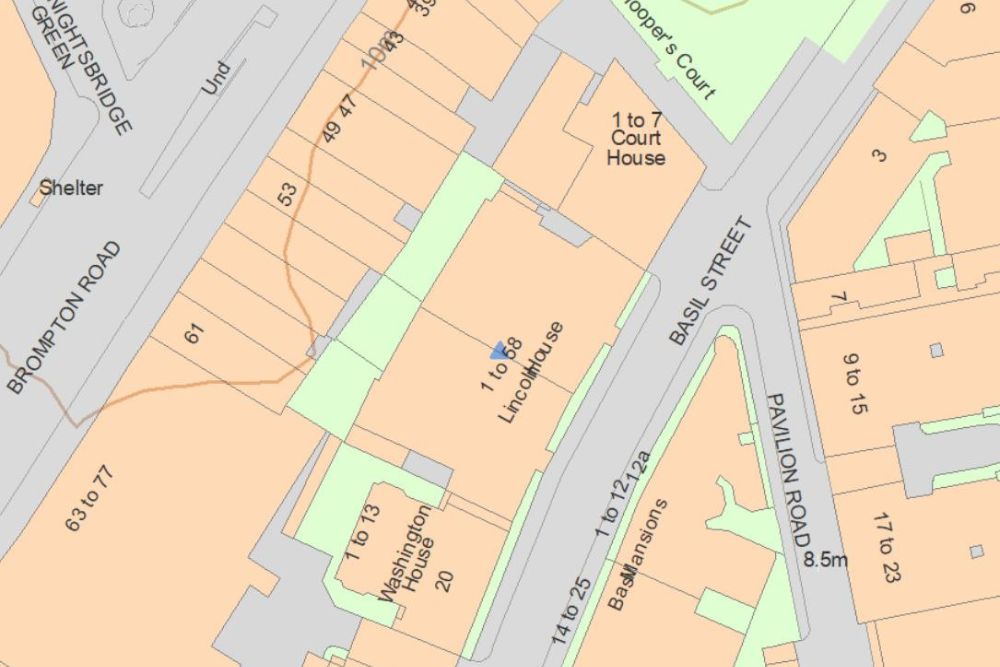
Our client commissioned us to undertake a Heritage Impact Assessment addressing proposals for the installation of a new heating interface unit that would require below-floor intervention across one of the component apartments making up Lincoln House.
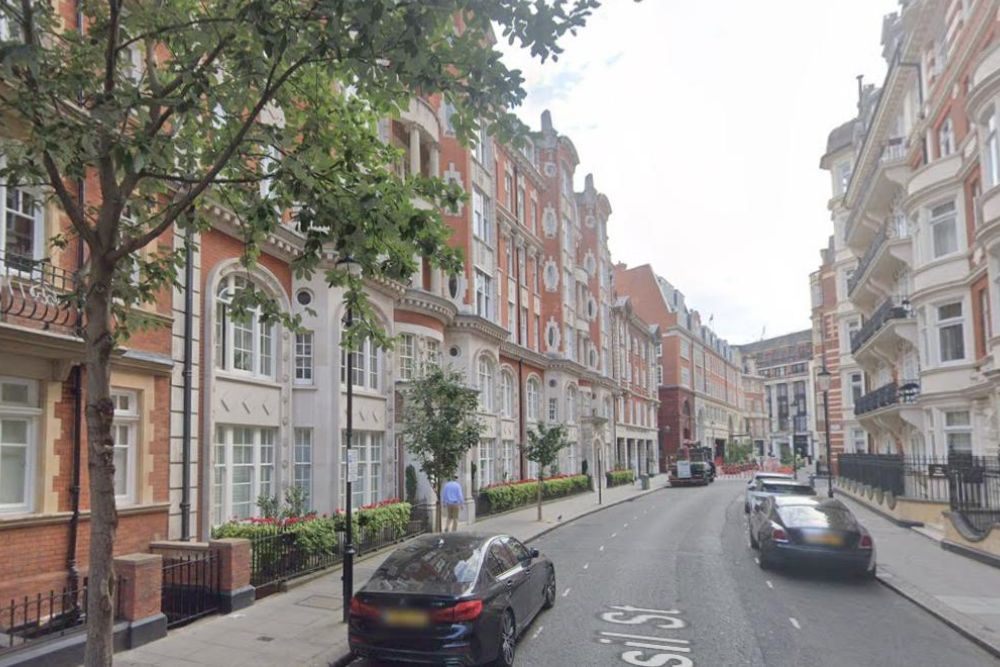
An historic property dating to 1903, Lincoln House suffered blast-damage from the nearby landing of a V1 flying bomb during the attacks of 1944-5. The building was recorded as damaged but not beyond repair and in 1946, plans were submitted to subdivide the original 24 apartments to create 48 residences.
These works involved the necessary creation of new layouts and associated means of circulation along with new doorways etc., combined with the restoration of bomb-damaged elevations. Little change to the exterior has occurred since then, but many of the flats have already been altered internally as part of ongoing modernisation.
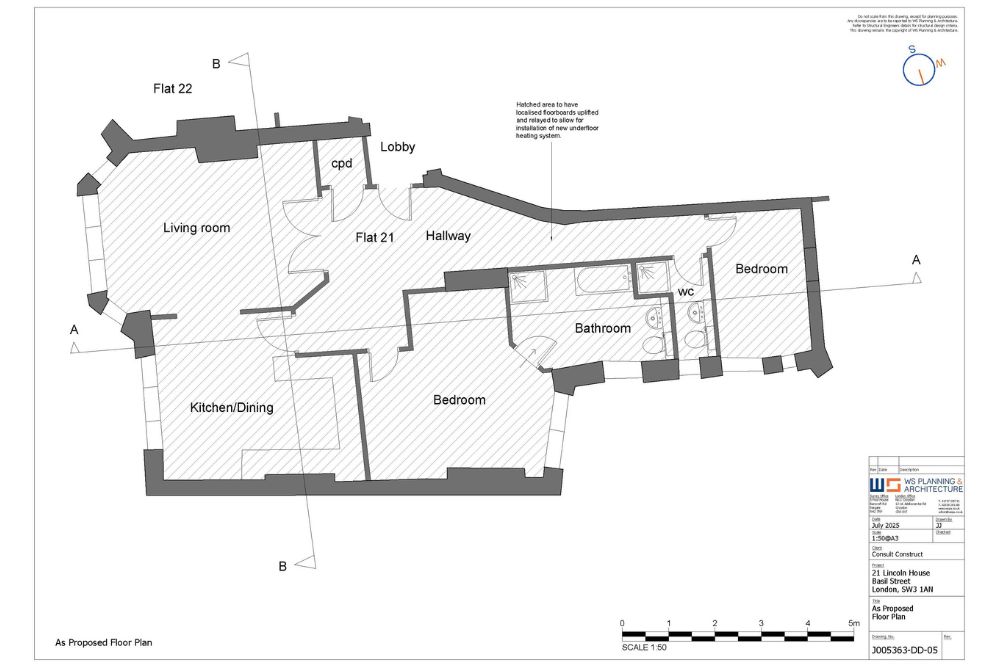
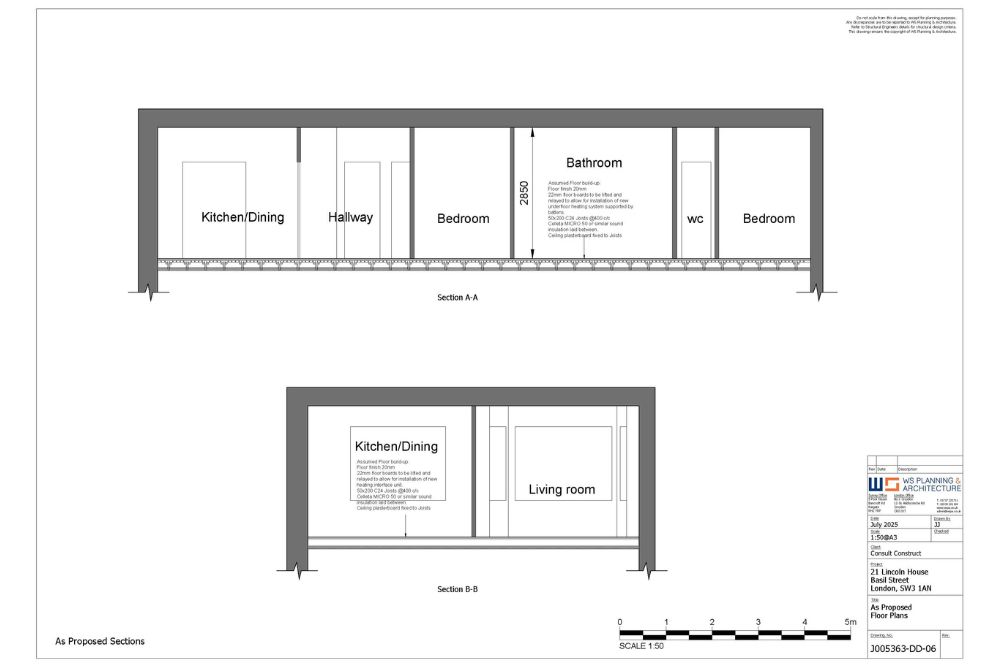
In brief, proposals entailed updating the heating and water system, whereby the flat in question would be connected to a centralised heating interface unit (HIU). However, with a view to minimising visual and physical impacts as far as practicably possible, all associated piping would be concealed beneath flooring and, where possible, utilise existing pipe runs.
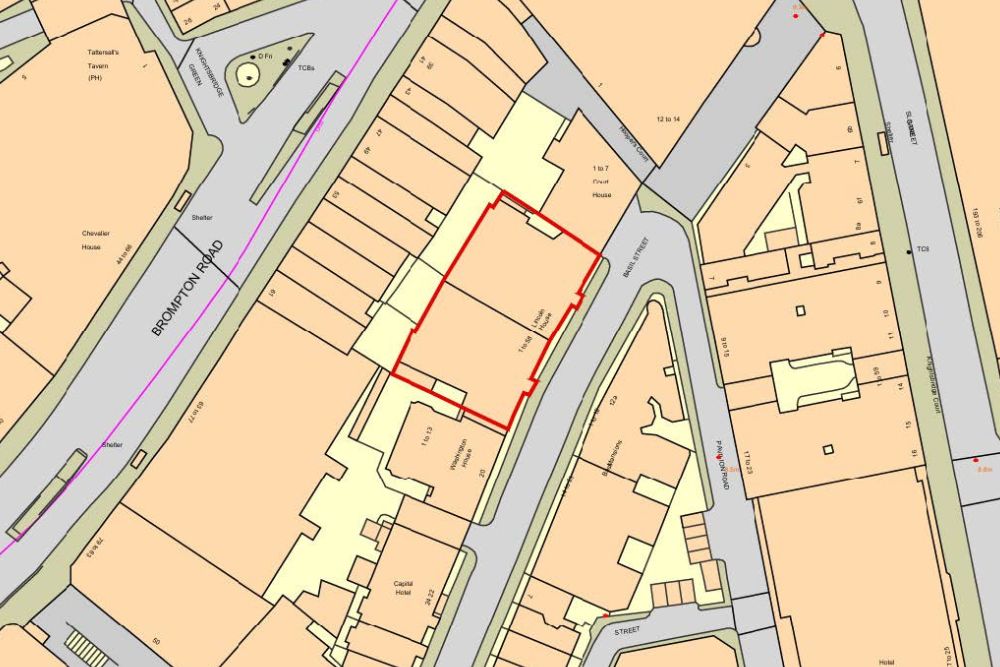
Whilst part of a Grade II listed building designated in 2009 that is in turn located in the Hans Town Conservation Area in Knightsbridge – an area of predominantly C18/C19 growth – proposals would obviously affect merely one, limited component of two overarching heritage assets. Nevertheless, the potential for impacts upon fabric and associated significance was considerable, as was the need to ensure that works were undertaken in a manner that was demonstrably responsible and safe for both building and occupants.
Our client commissioned us to undertake a Heritage Impact Assessment addressing proposals for the installation of a new heating interface unit that would require below-floor intervention across one of the component apartments making up Lincoln House.
An historic property dating to 1903, Lincoln House suffered blast-damage from the nearby landing of a V1 flying bomb during the attacks of 1944-5. The building was recorded as damaged but not beyond repair and in 1946, plans were submitted to subdivide the original 24 apartments to create 48 residences.
These works involved the necessary creation of new layouts and associated means of circulation along with new doorways etc., combined with the restoration of bomb-damaged elevations. Little change to the exterior has occurred since then, but many of the flats have already been altered internally as part of ongoing modernisation.
In brief, proposals entailed updating the heating and water system, whereby the flat in question would be connected to a centralised heating interface unit (HIU). However, with a view to minimising visual and physical impacts as far as practicably possible, all associated piping would be concealed beneath flooring and, where possible, utilise existing pipe runs.
Whilst part of a Grade II listed building designated in 2009 that is in turn located in the Hans Town Conservation Area in Knightsbridge – an area of predominantly C18/C19 growth – proposals would obviously affect merely one, limited component of two overarching heritage assets. Nevertheless, the potential for impacts upon fabric and associated significance was considerable, as was the need to ensure that works were undertaken in a manner that was demonstrably responsible and safe for both building and occupants.