In light of potential enforcement and/or prosecution, we were commissioned by Fitzrovia Land Ltd, to enter into discussion with the local authority. This resulted in the production of a Heritage Impact Assessment in support of applications to retrospectively regularise unlawful works believed to depart from earlier approvals. These dated to 2019 and concerned door and wall positions, recessed spotlights, smoke alarms, flush mounted speakers, radiator casings and other internal details etc.
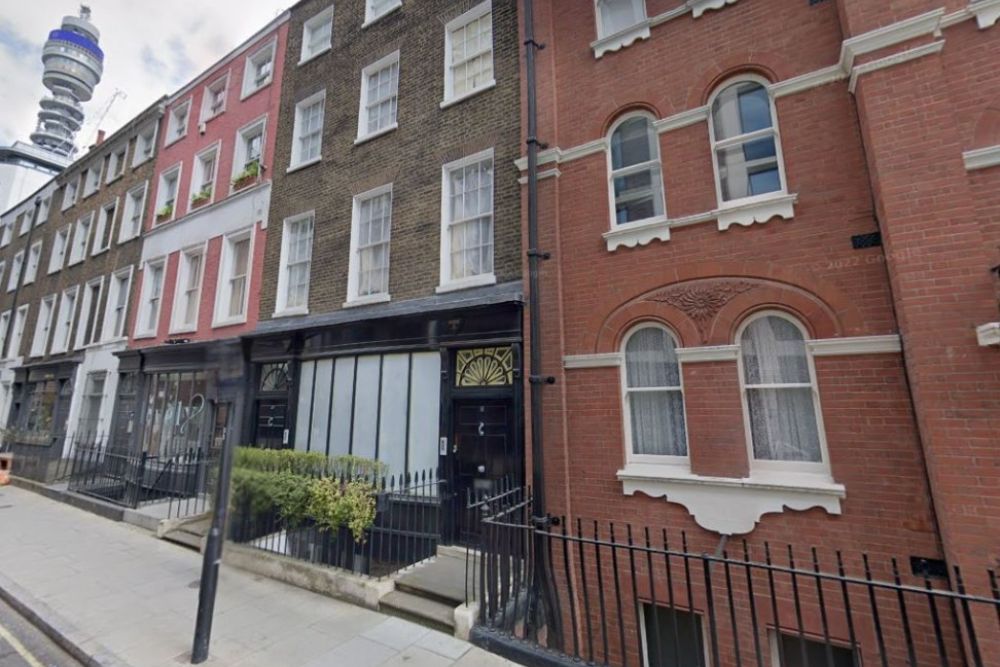
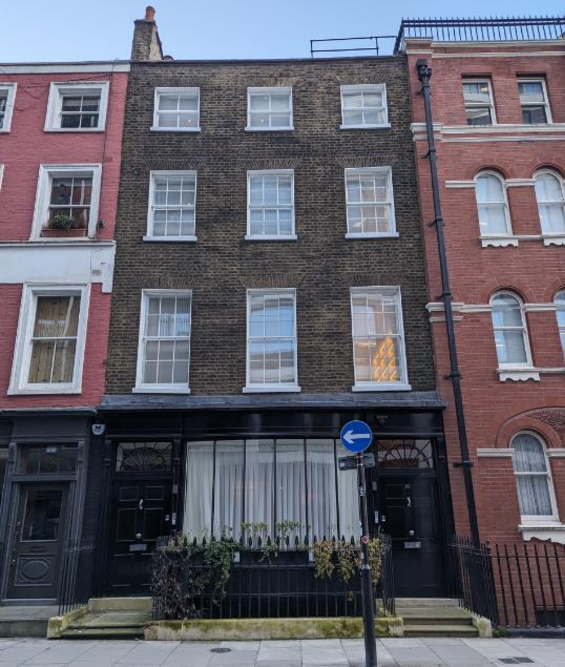
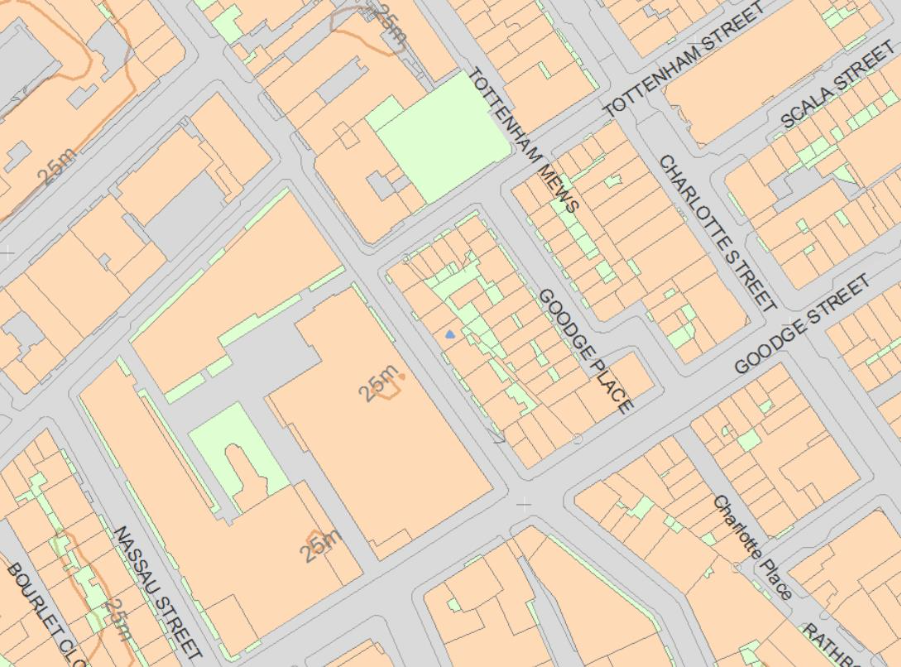
The property is a Grade II listed, late C18 former residence with an early C19 shopfront, located in Charlotte Street Conservation Area. Typical of the area, the former dwelling was subdivided early on in its history before ground floor level was given over to a workshop and commercial use, before the whole of the building became offices and consequently subject to a variety of institutional uses, including by Camden Council and the NHS.
This evolved, if not entirely eroded nature resulted in a scenario where the only original and/or appreciably historic aspects left remaining to the property were the layouts of each level – particularly stairs and/or landings – and the overriding building envelope. Original features and/or detailing had been almost entirely superseded in the building’s adaptation to later uses departing from the original, residential emphasis of the property.
Typically, background research, site survey and negotiation with the authority established that any significance formerly surviving to the property (outside stairs and/or landings etc.) had been largely superseded by 2014, following the property’s long and extensively impacted evolution. Therefore the various works in question were deemed to be without harm where these did not affect the special interest of the listed building.
In light of potential enforcement and/or prosecution, we were commissioned by Fitzrovia Land Ltd, to enter into discussion with the local authority. This resulted in the production of a Heritage Impact Assessment in support of applications to retrospectively regularise unlawful works believed to depart from earlier approvals. These dated to 2019 and concerned door and wall positions, recessed spotlights, smoke alarms, flush mounted speakers, radiator casings and other internal details etc.
The property is a Grade II listed, late C18 former residence with an early C19 shopfront, located in Charlotte Street Conservation Area. Typical of the area, the former dwelling was subdivided early on in its history before ground floor level was given over to a workshop and commercial use, before the whole of the building became offices and consequently subject to a variety of institutional uses, including by Camden Council and the NHS.
This evolved, if not entirely eroded nature resulted in a scenario where the only original and/or appreciably historic aspects left remaining to the property were the layouts of each level – particularly stairs and/or landings – and the overriding building envelope. Original features and/or detailing had been almost entirely superseded in the building’s adaptation to later uses departing from the original, residential emphasis of the property.
Typically, background research, site survey and negotiation with the authority established that any significance formerly surviving to the property (outside stairs and/or landings etc.) had been largely superseded by 2014, following the property’s long and extensively impacted evolution. Therefore the various works in question were deemed to be without harm where these did not affect the special interest of the listed building.