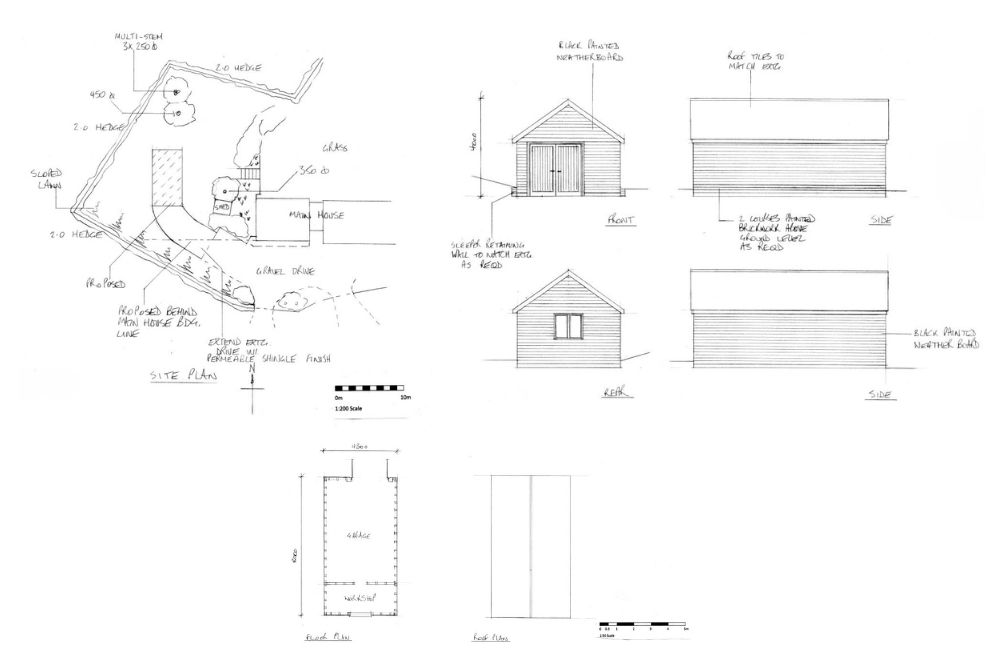
Our client commissioned us to undertake a Heritage Impact Assessment to address the proposals for the erection of a single storey detached garage on their property.
The application site hosts part of a Grade II listed building, being first designated in 1955.
Prestwood is a village located in Buckinghamshire, situated in the Chiltern Hills and approximately two miles west of Great Missenden and six miles north of High Wycombe. The village name is of Anglo-Saxon origin, meaning “Priest-wood”. There is evidence of settlement in the area from the Middle Ages, when this was largely covered in oak, beech, and ash trees.
In the 16th and 17th centuries, Prestwood did not have the parish boundary it does today.
It was primarily an agricultural community and comprised a mixture of arable and livestock farming.
By 1849, more of the woodland was being cleared to make way for agriculture and common land, around which approximately 100 houses now existed. Most villagers worked in cottage industries whilst the first parish church was constructed in the same year.
The arrival of the Great Missenden Railway in 1892 was to significantly improve access to central London, leading to Prestwood becoming a commuter village.
In the 1960s & 70s, swathes of large houses were constructed intended to attract families, an objective which is reflected in the building of two schools.
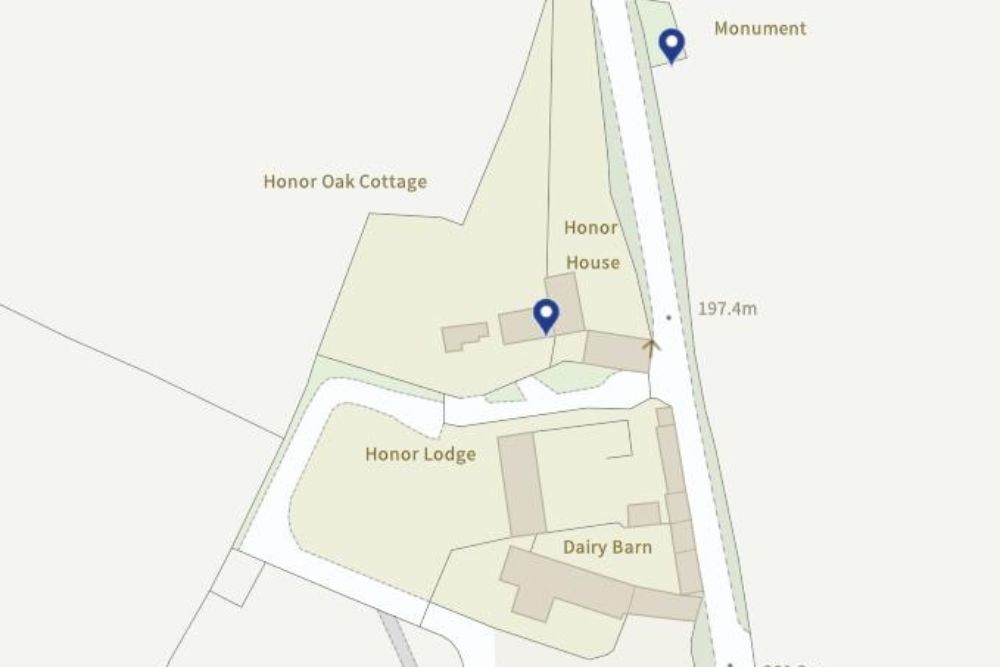
Located at the northern end of Honor End Lane, Honor Oak Cottage is a Grade II listed building that dates from the 16th century. It was formerly part of Honor House but consent was granted for the subdivision of this into two properties in 1955. Both properties are Grade II listed under the designation.
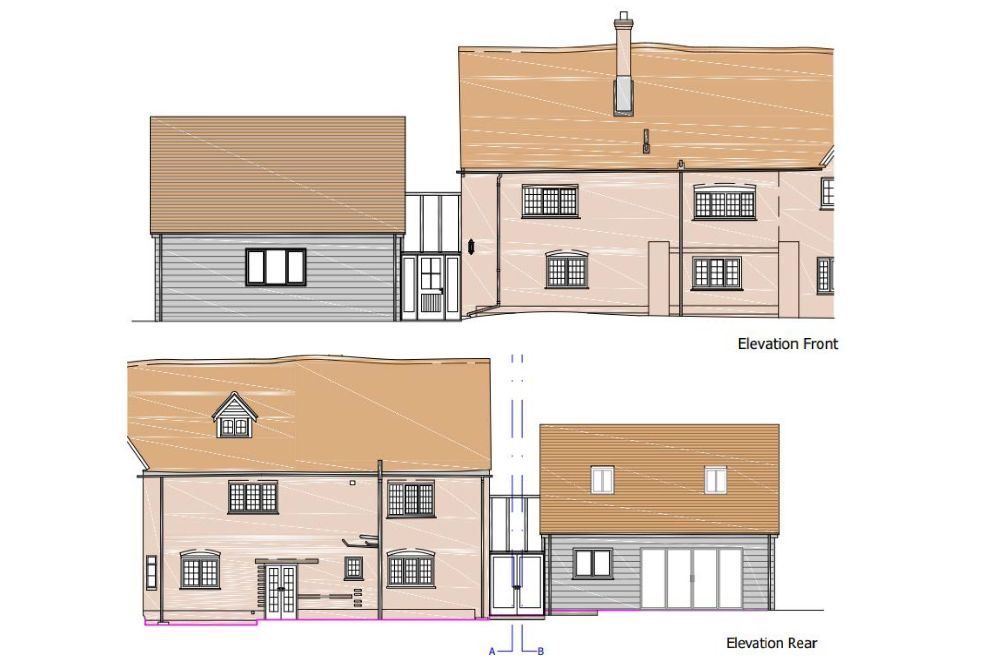
The site is situated off a narrow access track. It presently hosts a semi-detached, two-storey, brick-built dwelling under a clay tile roof with later, modern dormer windows to its rear elevation.
To its west, it also has a new single-storey side extension with accommodation in the roof space. The existing, designated dwelling(s) would remain entirely unaltered.
Proposals under consideration follow on from and respond to pre-application enquiry which concerns the construction of a detached single storey garage.
Comments received in response to this pre-application enquiry stated that the scheme was considered to be of an in-principle acceptability, albeit some concerns remained with respect to the character and appearance of the site and its relationship with the locality, particularly in terms of its location within the Green Belt.
However, said concerns have now been addressed in full and the proposal has therefore been carefully amended. The scheme also accords with the relevant regulatory framework comprising not merely national legislation in the form of the Act, but also both national and local policy in the form of NPPF and Wycombe District Local Plan.
It has as such been reduced in volume; been set back from the front building line of the host dwelling; and set away and at one definitive remove from the host so that it would not compete with this nor result in a cluttering effect more generally. The heritage asset therefore retains its pre-eminence whilst intervisibility is frustrated by means of intervening screening comprising shrubs and a shed.
Our client commissioned us to undertake a Heritage Impact Assessment to address the proposals for the erection of a single storey detached garage on their property.
The application site hosts part of a Grade II listed building, being first designated in 1955.
Prestwood is a village located in Buckinghamshire, situated in the Chiltern Hills and approximately two miles west of Great Missenden and six miles north of High Wycombe. The village name is of Anglo-Saxon origin, meaning “Priest-wood”. There is evidence of settlement in the area from the Middle Ages, when this was largely covered in oak, beech, and ash trees.
In the 16th and 17th centuries, Prestwood did not have the parish boundary it does today.
It was primarily an agricultural community and comprised a mixture of arable and livestock farming.
By 1849, more of the woodland was being cleared to make way for agriculture and common land, around which approximately 100 houses now existed. Most villagers worked in cottage industries whilst the first parish church was constructed in the same year.
The arrival of the Great Missenden Railway in 1892 was to significantly improve access to central London, leading to Prestwood becoming a commuter village.
In the 1960s & 70s, swathes of large houses were constructed intended to attract families, an objective which is reflected in the building of two schools.
Located at the northern end of Honor End Lane, Honor Oak Cottage is a Grade II listed building that dates from the 16th century. It was formerly part of Honor House but consent was granted for the subdivision of this into two properties in 1955. Both properties are Grade II listed under the designation.
The site is situated off a narrow access track. It presently hosts a semi-detached, two-storey, brick-built dwelling under a clay tile roof with later, modern dormer windows to its rear elevation.
To its west, it also has a new single-storey side extension with accommodation in the roof space. The existing, designated dwelling(s) would remain entirely unaltered.
Proposals under consideration follow on from and respond to pre-application enquiry which concerns the construction of a detached single storey garage.
Comments received in response to this pre-application enquiry stated that the scheme was considered to be of an in-principle acceptability, albeit some concerns remained with respect to the character and appearance of the site and its relationship with the locality, particularly in terms of its location within the Green Belt.
However, said concerns have now been addressed in full and the proposal has therefore been carefully amended. The scheme also accords with the relevant regulatory framework comprising not merely national legislation in the form of the Act, but also both national and local policy in the form of NPPF and Wycombe District Local Plan.
It has as such been reduced in volume; been set back from the front building line of the host dwelling; and set away and at one definitive remove from the host so that it would not compete with this nor result in a cluttering effect more generally. The heritage asset therefore retains its pre-eminence whilst intervisibility is frustrated by means of intervening screening comprising shrubs and a shed.